Keeping your kitchen spotless is not easy, but when it comes to maintaining your kitchen range hood, things can get a bit tricky. This unsung hero tirelessly extracts smoke, grease, and odours, ensuring your kitchen remains a pleasant place to be. However, without regular cleaning, it can become a breeding ground for grime and bacteria. So, how do you keep it in tip-top shape? This guide takes you through a step-by-step process to master the art of cleaning your kitchen range hood.
Have you ever pondered how much grime your range hood accumulates while you’re whipping up your culinary masterpieces?
Key Takeaways
- Know Your Range Hood: Identifying your hood type and components is crucial for effective cleaning
- Right Tools: The correct tools and materials simplify the cleaning process and prevent damage
- Preparation is Key: Proper preparation ensures a mess-free and efficient cleaning experience
- Regular Maintenance: Consistent upkeep prolongs the hood’s lifespan and maintains its efficiency
- Seek Professional Help: Know when it’s time to call in the experts
Understanding Your Kitchen Range Hood: Types and Components
Before diving into the cleaning process, it’s essential to understand the different types of kitchen range hoods and their components. This knowledge will guide you in selecting the appropriate cleaning methods and tools. Kitchen range hoods come in various styles, including wall-mounted, under-cabinet, and island hoods, each requiring a slightly different approach. Knowing the design of your range hood can streamline your cleaning efforts and ensure you aren’t missing any crucial areas.
Range hoods are composed of several parts that demand individual attention. The extractor fan is the heart of the ventilation system, and the filters play a vital role in trapping grease and particulates. The material of these components, whether stainless steel or aluminium, can influence the cleaning method you choose. Stainless steel, for instance, requires gentle cleaning agents to prevent corrosion and maintain its shine.
Understanding your kitchen appliance’s specific model is another crucial aspect of range hood maintenance. By getting to know the manufacturer’s instructions, you can determine which components can be taken out and how to clean them completely without causing harm. This not only improves cleaning efficiency but also extends the life of your range hood. Rangehood stainless steel surfaces needing cleaning will extend the life of your range hood.
Identifying removable parts is vital for a comprehensive cleaning process. Many components, such as filters and some detachable panels, can be taken out for a more thorough clean. This step ensures no area is overlooked and that the ventilation system remains unobstructed. A well-maintained range hood contributes to a healthier kitchen environment and keeps your cooking space fresh and inviting.
Essential Tools and Materials for Cleaning
To get started on your cleaning journey to clean a kitchen range hood , gather the necessary tools and materials. such as mild cleaning agents such as dish soap and vinegar cut through grease without damaging your range hood’s surfaces. These everyday household items can work wonders when it comes to degreasing and maintaining your kitchen appliance.
Using the right cleaning supplies is crucial to avoid scratching or damaging your range hood. Microfiber cloths and soft sponges are gentle yet effective at wiping away grime without leaving streaks. A soft-bristle brush can be invaluable for scrubbing stubborn grease from filters and other surfaces without causing harm.
A sturdy step ladder is a must-have for safely accessing elevated components of your range hood. Safety should always be a priority, and using a step ladder ensures you can reach every nook and cranny without risking a fall. Remember, a well-cleaned range hood makes your kitchen a safer and more pleasant place.
Warm water and a non-abrasive scrubbing pad make rinsing and wiping down your range hood an easy and effective task. These tools help you tackle even the most stubborn grease without scratching the surfaces.
Preparing Your Kitchen for a Mess-Free Cleaning Process
Before diving into the cleaning process, take a few preparation steps to protect your kitchen and streamline the task. Start by covering your hob and countertops with plastic sheets. This simple act shields surfaces from potential drips and debris, making clean-up a breeze once you’re done.
Switching off the power to your range hood is a crucial safety measure before you begin cleaning. This step prevents accidental activation, which could be dangerous during the cleaning process. Additionally, gather all necessary cleaning tools beforehand. Having everything within arm’s reach saves time and allows you to focus entirely on the task at hand.
Adequate ventilation is essential when using cleaning agents. Open windows to allow fresh air to circulate, preventing inhalation of any fumes. A well-ventilated space ensures your safety and comfort while you work on maintaining your kitchen appliance.
Safely Detaching and Handling Range Hood Filters
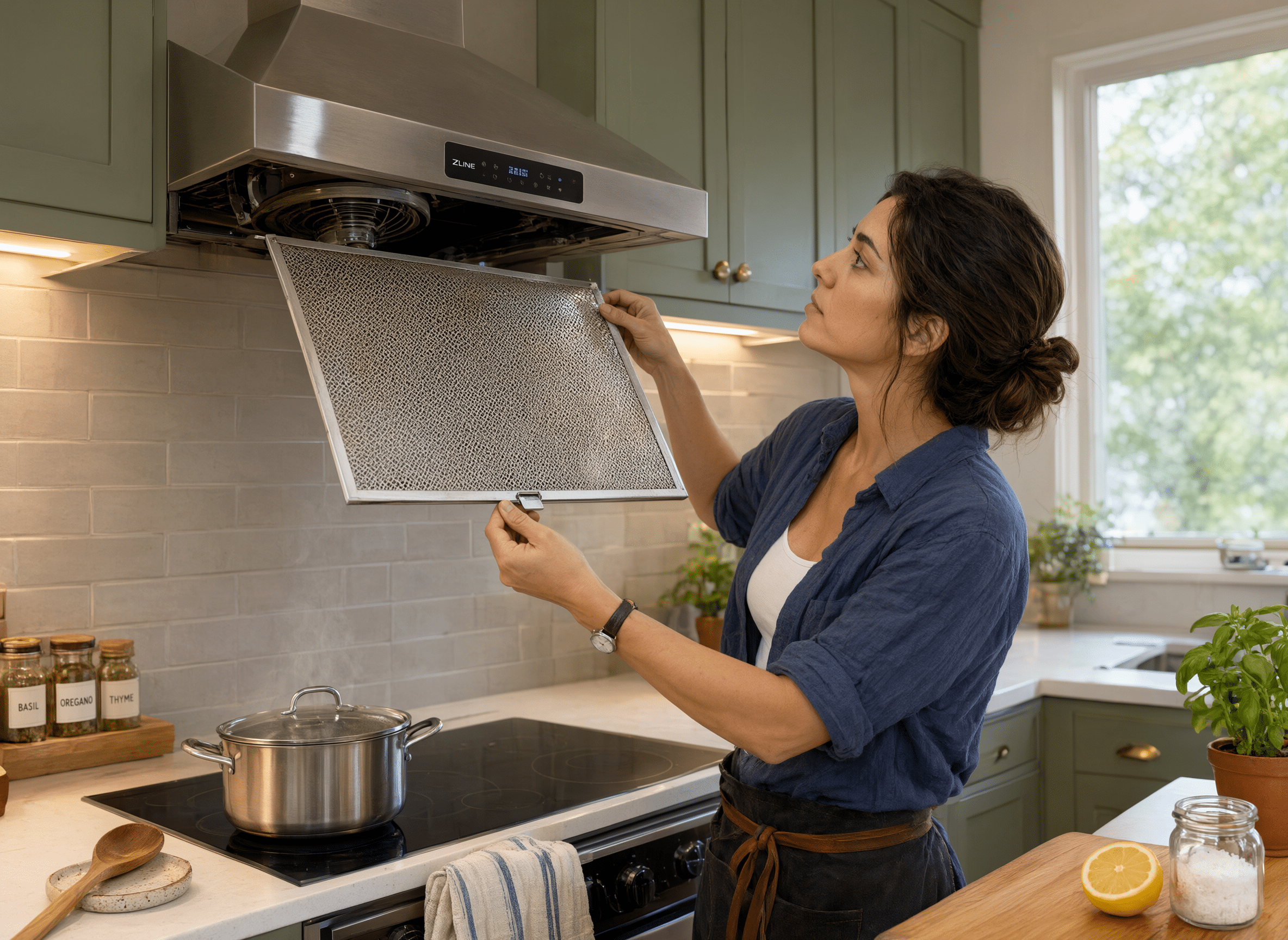
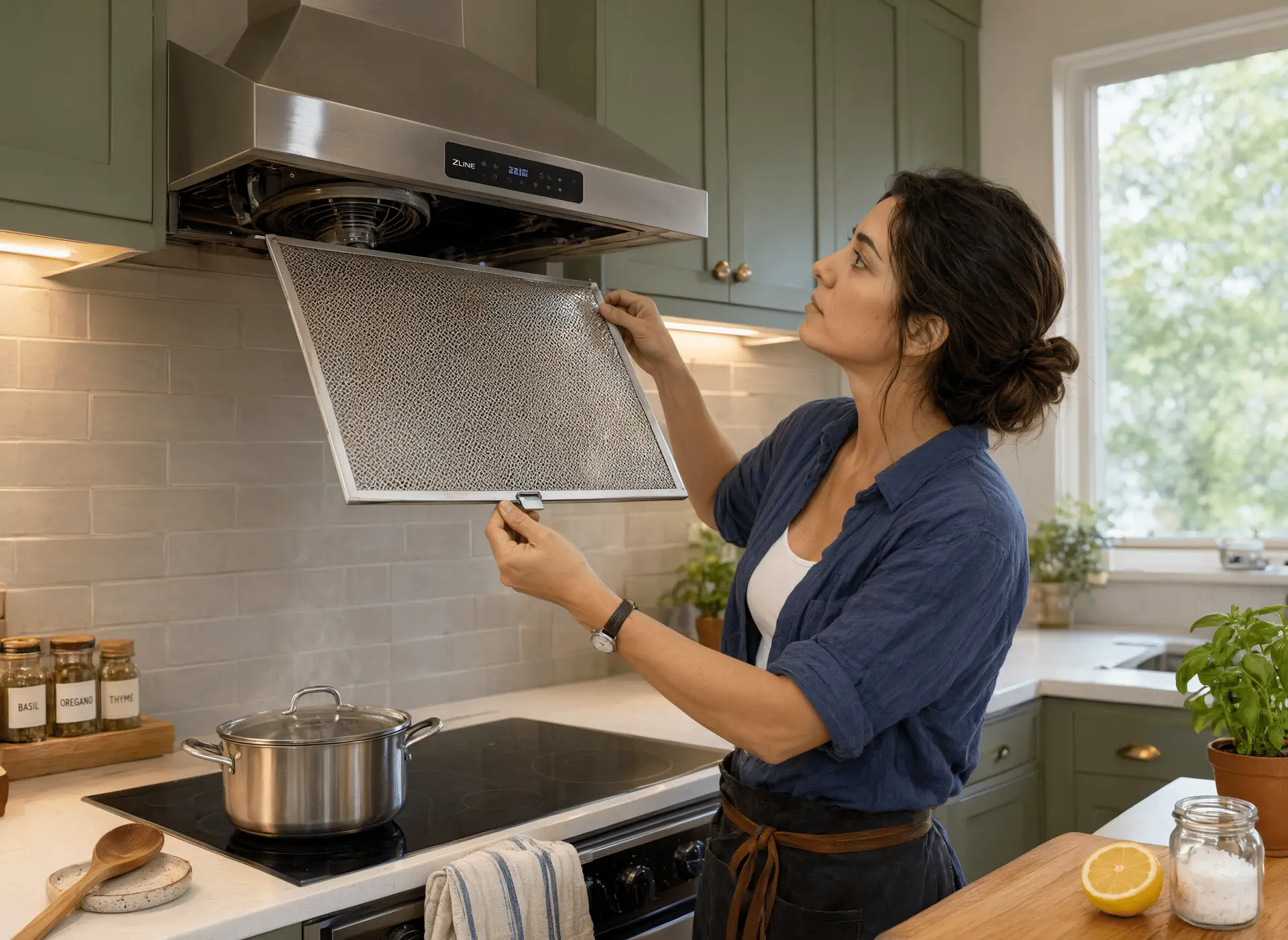
Detaching range hood filters is an essential step in the cleaning process, but it must be done carefully to prevent damage. Follow the manufacturer’s instructions for filter removal. These guidelines provide specific details on how to safely detach filters without causing harm to your range hood.
Wearing rubber gloves during this process protects your hands from sharp edges and cleaning chemicals. Safety should always be a priority, and gloves provide an extra layer of protection while handling potentially hazardous materials.
Once you’ve removed the filters, soak them in hot, soapy water. This helps to loosen accumulated grease and grime, making it easier to clean the filters thoroughly. If necessary, label the filters to ensure correct reinstallation after cleaning. Also check for wear and tear and replace filters if necessary.
Effectively Cleaning and Degreasing Range Hood Filters
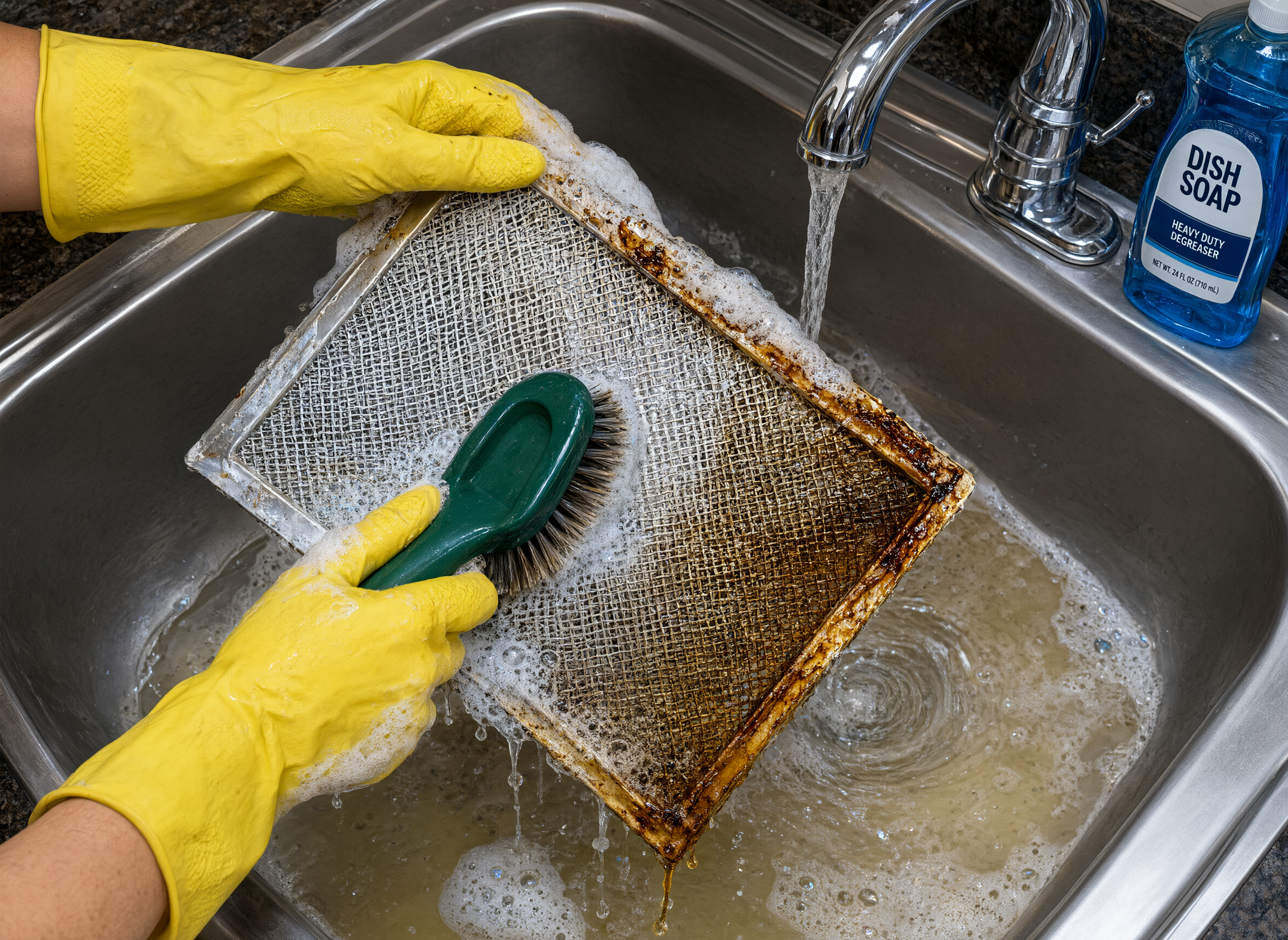
Now that you’ve safely detached the filters, it’s time to tackle the degreasing process. A baking soda and hot water soak is a powerful method to break down tough grease.
Gently scrub the filters with a soft brush to remove any embedded dirt. It requires a delicate touch to avoid damaging the filters while ensuring all residue is eliminated. Regular rinsing in clean water is essential to wash away all detergent and debris, leaving your filters fresh and ready for action.
Allow the filters to air dry completely to prevent mould and odours from developing. Moisture can lead to unwanted growth, so ensure the filters are thoroughly dry before reinstallation. This step not only maintains cleanliness but also contributes to the optimal performance of your range hood.
Tackling the Range Hood Interior: Removing Grease and Grime
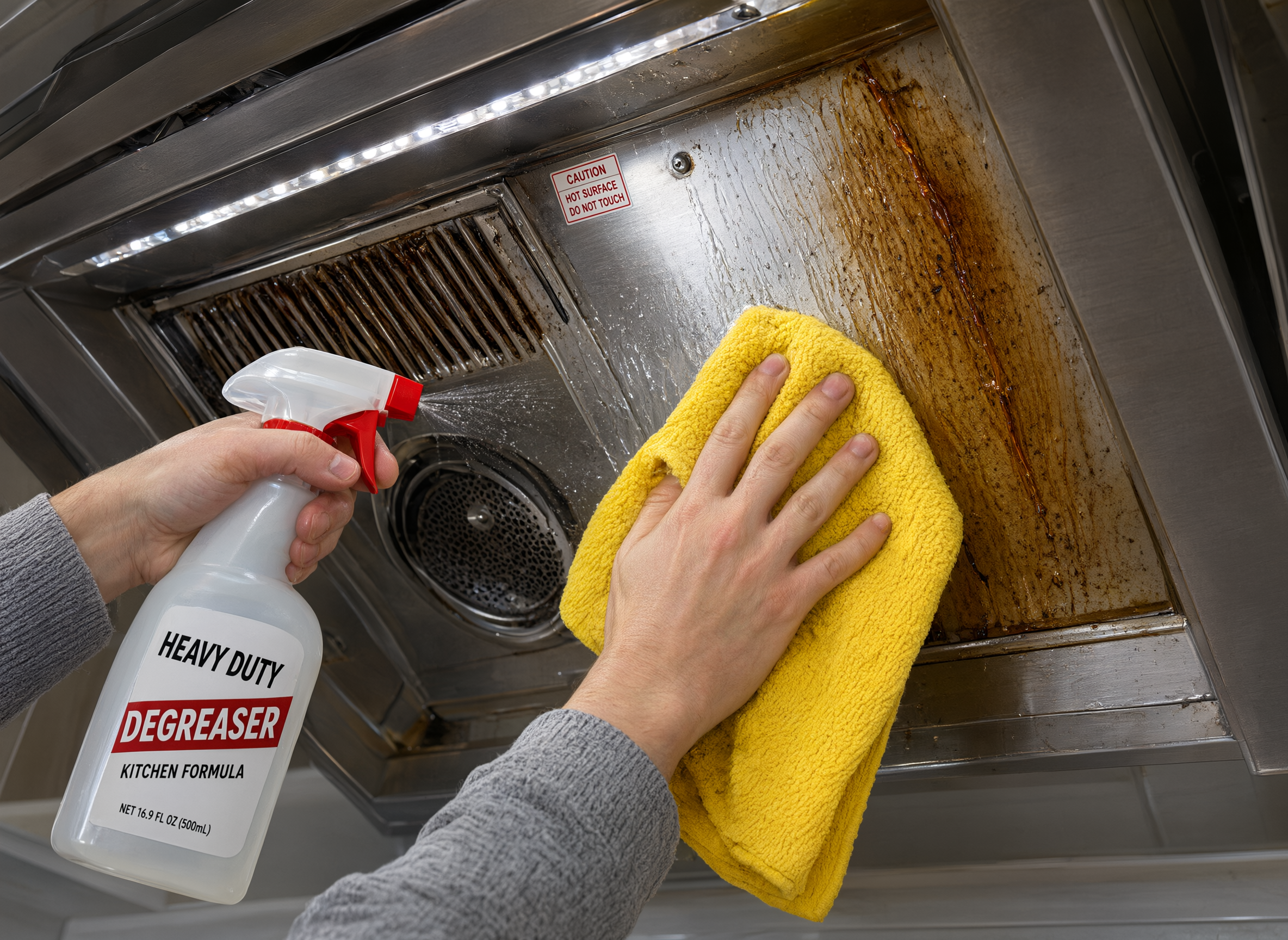
Cleaning the interior of your range hood is just as important as maintaining the filters. A mild detergent solution efficiently dissolves grease on interior surfaces without causing damage. This step ensures that your range hood remains in top condition and continues to perform effectively.
Using a damp, non-abrasive cloth protects surfaces while removing grime. This approach prevents scratches and other potential damage, allowing your range hood to retain its appearance and functionality. Regular wiping of the fan blades is essential to prevent grease build-up and maintain efficiency.
Inspecting the ductwork for any blockages is crucial during the cleaning process. Blockages can hinder your range hood’s performance, impacting its ability to remove smoke and odours effectively. By addressing any issues during cleaning, you ensure your kitchen remains a pleasant and inviting space.
Cleaning the Exterior Surface for a Spotless Finish
The exterior of your range hood deserves just as much attention as the interior. A stainless steel cleaner is excellent for restoring shine and preventing fingerprints on exterior surfaces. This step ensures your range hood remains a focal point in your kitchen, contributing to its overall aesthetic.
Wiping in the direction of the grain reduces the appearance of streaks and enhances the finish. This technique provides a polished and professional look, keeping your range hood looking its best. A vinegar-water solution effectively cleans glass components, leaving a streak-free finish that enhances the overall appearance.
Buffing with a dry microfiber cloth further enhances the appearance of the cleaned surface. This final touch leaves your range hood gleaming and ready to impress. Checking for residue and re-wiping as necessary ensures no cleaning solution is left behind, completing the cleaning process with a spotless finish.
Ensuring Proper Maintenance and Longevity of Your Range Hood
Regular maintenance is key to extending the lifespan of your kitchen range hood. Monthly cleaning prevents grease accumulation, reducing the risk of fire hazards and maintaining a clean kitchen environment. Consistent upkeep ensures your range hood remains in top condition, ready to tackle any cooking challenge.
Replacing filters every six months maintains optimal air filtration, contributing to a healthier kitchen environment. Clean filters ensure your range hood operates efficiently, removing smoke and odours effectively. Regular inspection of fan operation is also essential to ensure efficient removal of cooking by-products.
Common Mistakes to Avoid When Cleaning Your Kitchen Range Hood
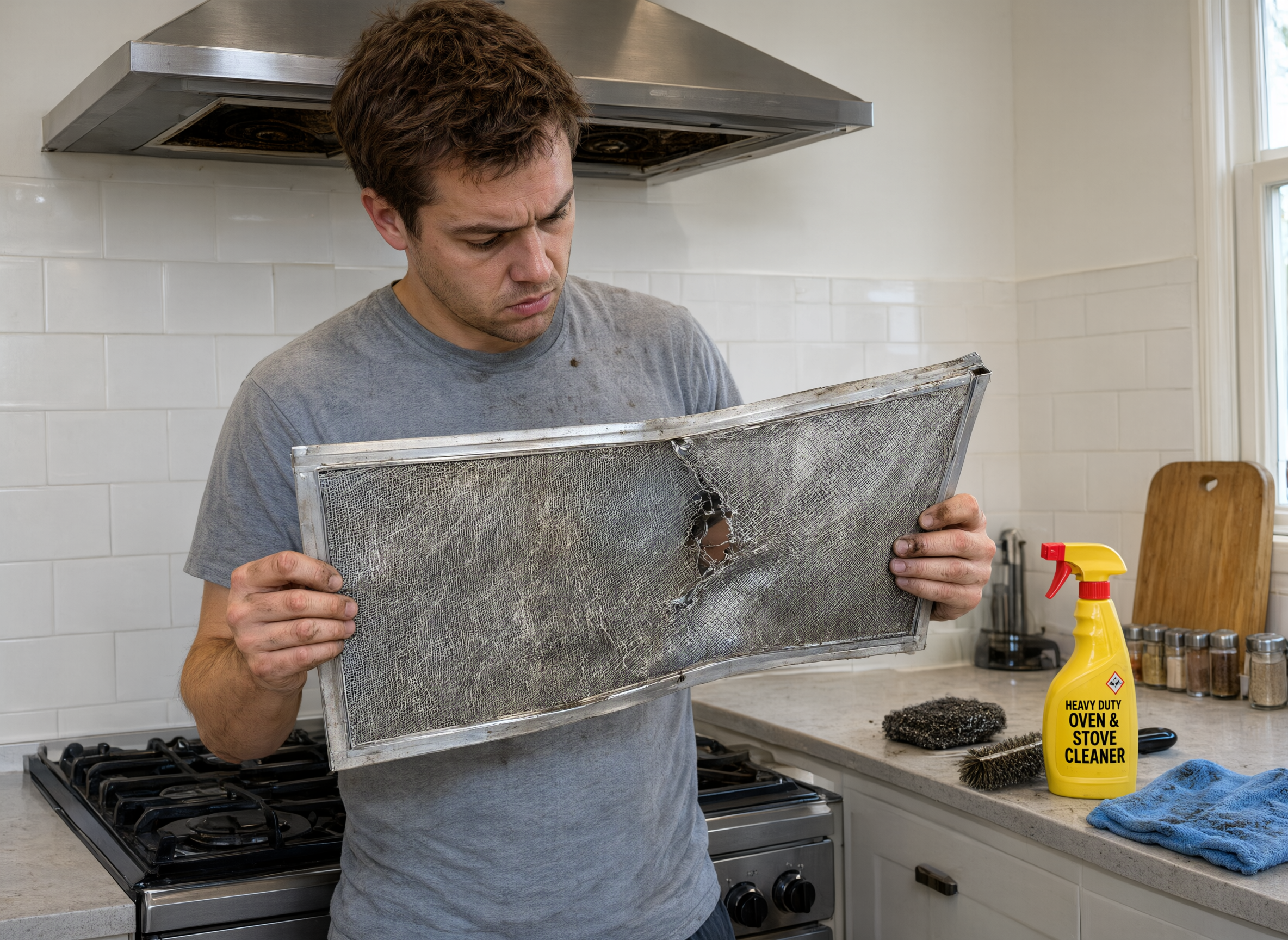
Avoiding common pitfalls during the cleaning process is crucial for maintaining your range hood’s condition. Ignoring manufacturer instructions can lead to improper cleaning and potential damage. Always refer to the guidelines provided to ensure a thorough and safe cleaning experience.
Using harsh chemicals risks corrosion and damage to range hood components. Opt for mild cleaning agents to protect your kitchen appliance while effectively removing grease and grime. Failing to dry filters completely encourages mould growth and odours, compromising the cleanliness of your range hood.
Overlooking the ductwork during cleaning can result in reduced efficiency. Regular inspection and maintenance of this component ensure your range hood operates at its best, maintaining a fresh and pleasant kitchen environment. Neglecting regular maintenance shortens the lifespan of your range hood, leading to costly repairs or replacements.
When to Seek Professional Help for Range Hood Maintenance
Knowing when to call in the experts is an important aspect of range hood maintenance. Unusual noises or vibrations may indicate mechanical issues requiring professional attention. Don’t ignore these signs, as they could lead to more significant problems if left unaddressed.
Persistent odours suggest ventilation problems that professionals can address effectively. If you’re experiencing frequent power outages or electrical issues with your range hood, it’s time to seek expert maintenance assistance. These signs indicate more complex problems that require professional intervention.
Extensive grease build-up unmanageable by regular cleaning indicates a need for professional cleaning. In such cases, calling in the experts ensures your range hood is thoroughly cleaned and maintained. Regular professional inspections ensure compliance with safety standards and optimal performance, providing peace of mind and a well-functioning kitchen appliance.
With our friendly team available in Sydney suburbs, getting a quote and scheduling professional maintenance is just a call away. Contact us today to discuss how we can help you keep your kitchen range hood in top condition.
Frequently Asked Questions
How do I deep clean my range hood?
To deep clean your range hood, start by removing the filters and soaking them in hot, soapy water. Use a degreaser to scrub the inside of the hood and a soft cloth to wipe the exterior. Rinse the filters thoroughly and let them dry before reassembling. Pay special attention to corners and crevices where grease tends to build up. Regular deep cleaning prevents odours and maintains efficient performance.
What is the best rangehood degreaser?
A high-quality, kitchen-specific degreaser is ideal for tackling tough grease on your range hood. Look for a product that is non-abrasive and safe for use on both stainless steel and painted surfaces. Citrus-based degreasers are popular due to their powerful grease-cutting abilities and pleasant scent. Always follow the manufacturer’s instructions for the best results.
What is the best way to clean a stainless steel range hood?
For a stainless steel range hood, use a soft microfibre cloth and a gentle cleaner specifically designed for stainless steel. Apply the cleaner directly to the cloth rather than the surface to avoid streaks. Wipe in the direction of the grain to maintain the hood’s sleek appearance. Finish by buffing with a dry cloth for a polished shine.
How to clean a range hood without taking it apart?
Cleaning your range hood without disassembly involves using a microfibre cloth and a mild degreaser. Spray the degreaser onto the cloth and wipe the exterior and easily accessible interior areas. Pay attention to the edges and seams. For the filters, if they’re not removable, gently scrub them in place. Regular maintenance will reduce the need for frequent deep cleaning.